


Na-ChatGPT Mo Na Ba?
What Asking AI About Your Health Really Means and when to see a doctor
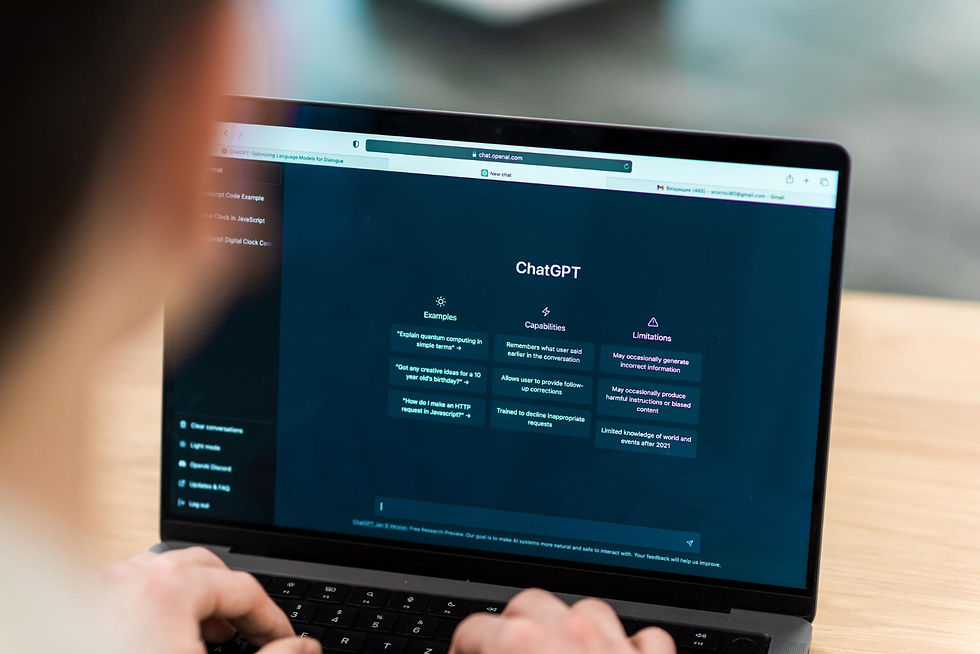
Have you ever been in a situation where something doesn’t feel quite right with your body?
Maybe you’ve been feeling tired for weeks. Or your stomach acts up after meals. Or you keep getting headaches and you’re not sure if it’s stress, puyat, or something else. You tell yourself, “Mamaya na ‘to,” but it keeps bothering you.
So, you do what many Filipinos do now: You open your phone and ask Google. Or ChatGPT.
Suddenly, you’re reading possible explanations. Some are reassuring. Others are alarming. And now you’re left wondering: “Should I be worried? Kailangan ko na ba magpatingin?”
If this sounds familiar, you’re definitely not alone.
Why More Filipinos Are Asking AI About Their Health
In 2026, asking AI about symptoms has become a normal first step for many people. Not because they don’t trust doctors, but because AI is fast, accessible, and always available even late at night when clinics are closed, and your mind won’t stop overthinking.
AI feels like a safe place to start. It helps people put words to what they’re feeling and gives them a sense of direction. For some, it even reduces anxiety enough to finally take action instead of ignoring symptoms.
But this brings up an important question: how far should AI go when it comes to your health?
What AI Can Help With? and Where It Stops?
AI tools like ChatGPT are good at explaining medical terms in simple language. They can help you understand what certain symptoms might be connected to, why doctors ask specific questions, or what tests are usually done for certain concerns.
In many cases, this helps patients feel more informed and more confident about seeking care.
But AI has clear limits. It doesn’t know your full medical history. It can’t examine you, check your vital signs, or see physical clues that only show up during a proper consultation. It works with probabilities, not certainty.
That’s why AI should be treated as a starting point, not a diagnosis.
Where Real Clinics Come In

This is where outpatient clinics play a crucial role.
For patients, this means clearer explanations, more meaningful consultations, and better follow-through, things that no chatbot can fully replace. If you’ve ever caught yourself saying, “Na-ChatGPT ko na ‘to, pero di pa rin ako sure,” that’s your cue.
AI helped you ask the question. A doctor helps you get the answer.
Peace of mind doesn’t come from search results. It comes from knowing what’s really going on with your health and knowing what to do next.
How HealthFirst Clinic Supports Smarter Health Decisions

At HealthFirst Clinic, we understand that patients today are more informed and more curious, and that’s a good thing. We welcome questions, even the ones that start with, “Doc, may nabasa po ako…”
Our role is to help you sort through information, confirm what’s accurate, recommend the right tests, and guide you toward proper care. We combine modern tools with real clinical expertise, so you don’t have to guess or overthink alone.
Take the Next Step Toward Clarity
If something has been bothering you and you’re not sure whether to worry or wait, don’t stop at AI.
👉 Book a consultation at HealthFirst Clinic today and turn uncertainty into clarity.
(02) 8860 9740
Sources
World Health Organization – Ethics and governance of artificial intelligence for health
Nature Digital Medicine – AI as clinical decision support in outpatient care
McKinsey Health Institute – The role of AI in primary and ambulatory healthcare
Philippine Department of Health – Digital health and telemedicine initiatives


solid